Family Learning
Research has shown that families are the first and most important teachers.
Family Learning helps parents and carers gain confidence and skills to provide vital support for their children’s development and wellbeing. We encourage families to engage better with schools and to feel more confident working and communicating with teachers. Our workshops explain the UK school curriculum and how children learn and develop. Family Learning helps parents raise children’s attainment and provides a good foundation for an exciting learning journey.
Our workshops include:
- Maths in KS2 – calculations
- Maths in KS2 – reasoning
- ESOL for parents – pre-entry to entry 2 mixed ability
- Phonics in schools – what children learn and how to support your child
- Everyday English for Parents New to the UK (EAL)
- UK School
- Family First Aid
- UK Phonics (for adults)
- Art and craft making together
- Maths for fun – make puzzles, 3D structures and toys while developing maths skills
- Bookstart creations
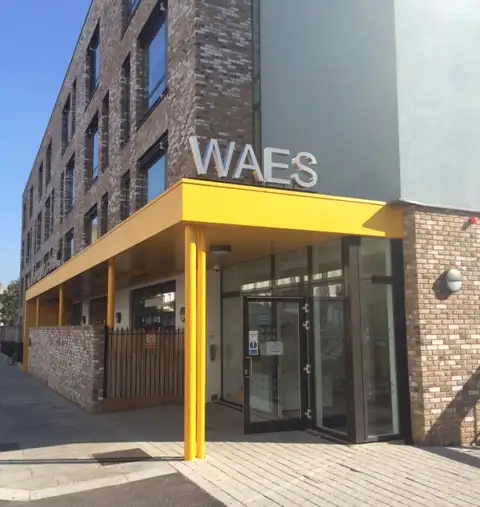
All our workshops and courses are FREE. Check out some of our courses below. We deliver in schools, family hubs, libraries, WAES centres and at community events in Westminster.
Are you a parent or carer? Ask about us at your child’s school and follow us on Facebook, Twitter or Instagram, or for more information email communitylearning@waes.ac.uk with your contact details and the Community Team will get in touch with you.
Are you a school? Contact Harriet Amos to discuss what we could deliver for you at communitylearning@waes.ac.uk
Family Learning at WAES offers a wide range of friendly, practical workshops designed to empower parents and carers to support their children’s education and wellbeing. Whether you want to better understand how your child learns, feel more confident helping with homework, strengthen family relationships, or enjoy creative activities together, you’ll find a course that suits your needs.Our workshops cover essential skills such as key maths concepts, English and phonics, digital safety, and understanding how schools teach and assess children. Examples include Everyday English for Parents New to the UK, Read and Spell in English Using Phonics, Developing Mathematical Reasoning in KS2 and Empowering Parents in the Digital Age, Confident Communication.
- Highly qualified and professionally experienced tutors
- Accessible Central London centres with bespoke facilities and great transport connections
- A wide range of in-person, online, distance learning and community-based courses
- Unique work experience opportunities through partnerships
- Guest speakers offer introductions to career pathways in a variety of sectors
- Excellent progression to employment, apprenticeships or further learning including university